Why does being quiet at work get treated like a problem?
By The Derpy Dave Team
The short answer
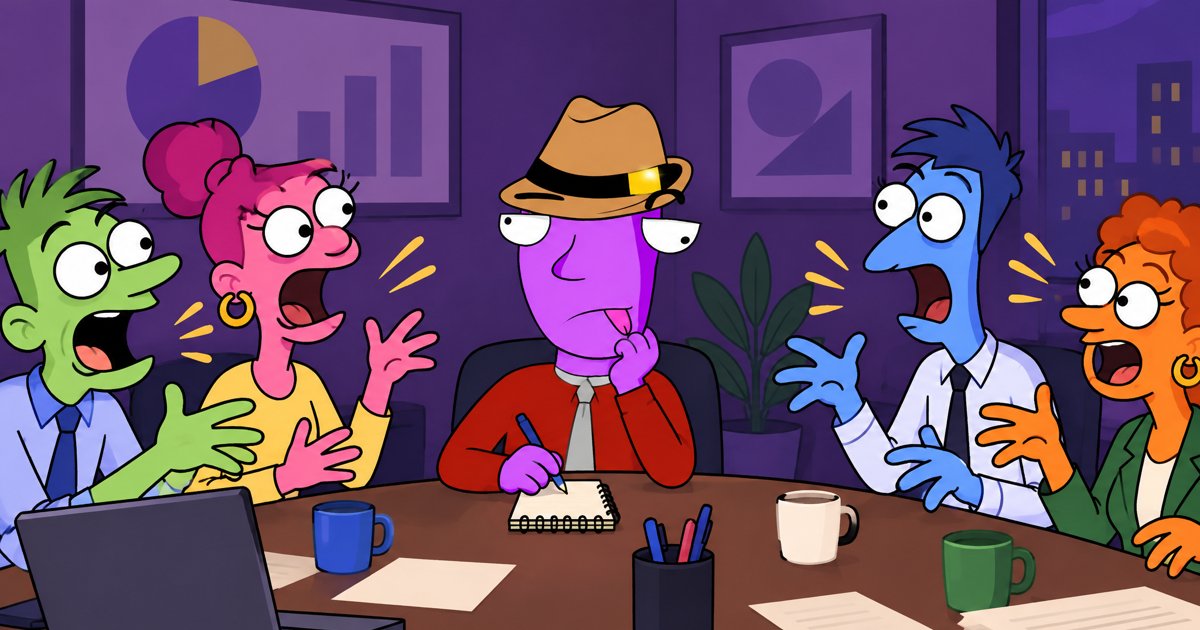
Being quiet at work gets treated like a problem because people often use speaking up as a shortcut for judging who’s engaged, approachable, or good at their job. When you say less, coworkers have fewer clues and may fill in the gaps themselves. If that keeps your work from getting noticed, start by making your contributions easier to see. One useful comment, a written follow-up, or a clear progress update can give people something concrete to go on.
Why do quiet coworkers get misread?
Picture a Monday meeting. You’re listening, you’ve spotted the problem, and you’re waiting for a gap. Someone else gets there first. By the time you open your mouth, the team has moved on to a meeting about the next meeting.
From your seat, you were paying attention. From across the table, someone might assume you had nothing to add. Both people sat through the same meeting. Only one of them knows what was happening in your head.
In three workplace studies published in 2025, researcher Mallory McCord found that coworkers described as introverted were perceived as less warm and less competent than coworkers described as extraverted. The first study drew on 217 respondents from one U.S. university. The studies examined people’s impressions, so they tell us how coworkers were seen. Read the study in Occupational Health Science.
Can being quiet hurt your career?
It can, especially when the people evaluating your work rarely see how you contribute. A 2019 review of 97 meta-analyses found a small average advantage for extraversion across a wide range of work-related measures. The sociability part of extraversion, meaning how much someone enjoys social interaction, showed few advantages on its own. The review looked at extraversion broadly, which goes beyond how much anyone talks in meetings. Read the review in the Journal of Applied Psychology.
If your manager says you’re “too quiet,” ask for an example. Try “Was there a meeting or project where you needed something from me sooner?” That gives you a chance to find out whether they needed a quicker update, a clearer recommendation, or a heads-up about a problem.
When should you change how you communicate?
When someone needs information from you to make a decision, meet a deadline, or avoid a mistake, give it to them early in whatever format works for the situation. Raise an urgent issue in the room. Send a written update when people have time to read it. A good handoff tells people what changed, what’s blocked, and what they need to do next.
How can you make your work more visible?
If you manage a team, try sending the agenda ahead of time and giving people a way to weigh in afterward. When you ask for more participation, describe the contribution you need. “Flag schedule risks before we commit” gives someone an action they can take.
What would Derpy Dave do?
In a Derpy Dave version of that meeting, Dave spends twenty minutes listening. Then he sends a four-line recap and everyone replies, “Wait, that’s what we decided?”
Derpy Dave is an original comedy character for people who know what it feels like to be counted out before anyone sees what they can do. If you’ve ever had a good idea and waited so long for a gap that the meeting ended, pull up a chair. We saved you one.
Questions about being quiet at work
Is it bad to be the quiet one at work?
No. You can be quiet and still be engaged. Make sure teammates get the information they need and that the people evaluating your work can see what you contribute.
Do I have to act more outgoing to get noticed?
Start with one behavior you can keep up, like sharing a recommendation in writing or making one prepared point in a meeting. Choose a format that suits the work and the people who need to hear it.
What can I say when someone calls me “too quiet”?
Try “I tend to listen first. Was there something you wanted my input on?” If it’s formal feedback, ask for a specific example and what they’d like you to do in that situation.
Ever been called “too quiet” at work? What did you wish you’d said back? Share it with the Derpy community on Reddit.
Keep exploring
Written by The Derpy Dave Team
The people behind Derpy Dave, a character-driven movement for the overlooked, the sidelined and the counted out.
@Being_DerpyAF