How do I deal with being underestimated?
By The Derpy Dave Team
The Short Answer
You deal with being underestimated by separating someone's opinion from your actual ability, deciding whose opinion is worth your energy, and letting steady, visible work do some of the talking. You do not owe everyone a correction. Some people may change their view when they see what you can do, and some may not. Being underestimated can light a fire under you, but it does not guarantee a win, and it is completely fine to be annoyed about it.
First, what does "being underestimated" actually mean?
Being underestimated means someone has judged your skill, intelligence or potential as lower than it really is. It often comes from a first impression: your age, your looks, your job title, a quiet personality, or just being the new person. Their estimate is built on limited information. It is a guess, not a measurement.
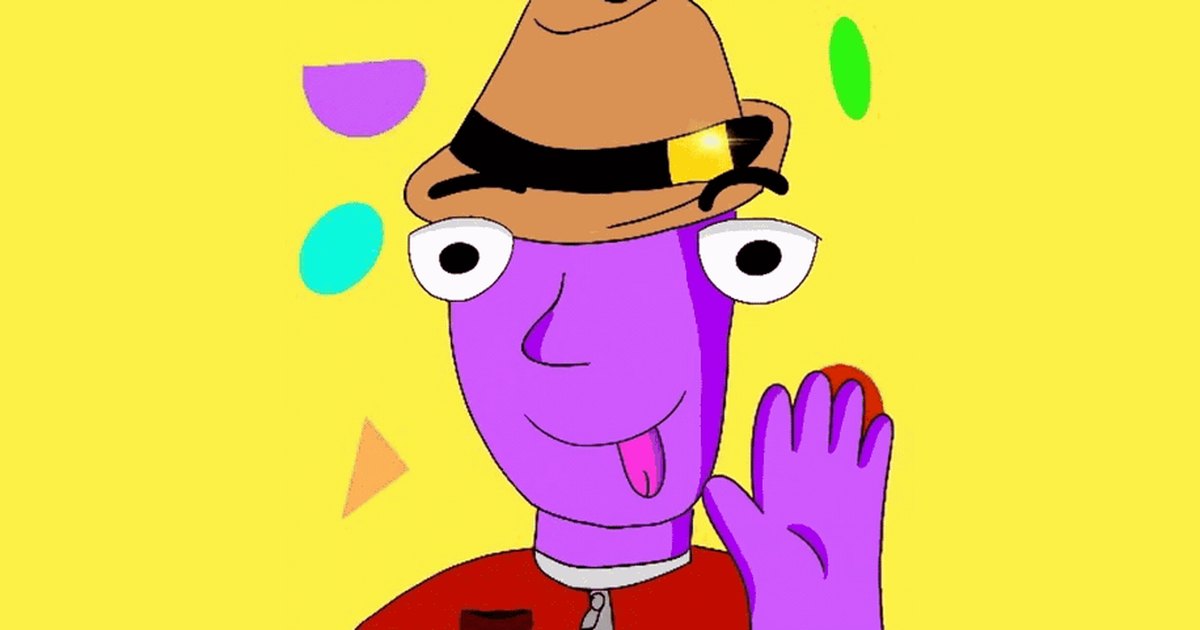
Derpy Dave knows this one well. He has big eyes, his tongue is permanently out, and he looks like he just walked into a glass door. People decide what he is about in roughly half a second. They are usually wrong.
Why it stings more than it "should"
If a passing comment ruins your afternoon, there is a reason. Psychologists Roy Baumeister and Mark Leary reviewed a large body of research in 1995 and concluded that the need to belong is a powerful, fundamental human motivation (Baumeister and Leary, 1995, *Psychological Bulletin*). Being written off pokes right at that need. So the sting is not you being dramatic. It is you being human.
What to do when someone underestimates you
1. Pause so you can choose your response
The first reaction is not always the most useful one. Give yourself a breath so you can pick a response that serves your goal, whether that is getting the opportunity, keeping the peace, or simply moving on.
Example: A coworker says, "Maybe let someone with more experience take the client call." Instead of firing back, you try: "I'd like a shot at it. What would a great call look like to you?" You stay in the conversation and you get useful information.
2. Decide whose opinion actually counts
Not every opinion deserves the same airtime. Your manager's view can affect your job. A stranger in the comments affects your mood for ten minutes, and only if you let them. Spend your effort where the stakes are real.
3. Turn vague doubt into a clear target
Underestimation is often fuzzy. "You're not ready" is not a plan. Ask, "What would you need to see to feel confident?" Now you either have something concrete to work toward, or proof that the goalposts are on wheels.
4. Make your work visible
Quiet effort is easy to miss. Share progress in simple ways: a short update, a finished example, a before and after. That is not bragging. It is replacing someone's guess with real information.
5. Keep a small evidence file
Write down things you did well, kind feedback, and problems you solved. On rough days, read it. It helps you argue with your own doubt, not just theirs.
6. Find at least one person in your corner
A mentor, a friend, a teammate, or a community where people get it. Having someone who sees what you can do may make the doubters easier to tune out.
7. Know when to stop auditioning
If someone keeps moving the bar no matter what you do, that tells you something. You are allowed to stop performing for an audience that never claps.
When it is part of something bigger
Sometimes being underestimated is not a one-off. It can be connected to bias or discrimination, or to a workplace or school that keeps overlooking certain people. In those situations, working harder may not be enough on its own. Write down what happens, talk to people you trust, and look into options like HR, a union, a school counselor or legal advice where it applies. That is not giving up. It is picking the right tool for the problem.
The honest part
Being underestimated is not a secret superpower. Some underdogs win. Many do not get the recognition they deserve, no matter how talented they are. The point of everything above is not to guarantee a comeback montage with dramatic music. It is to protect your confidence, choose where your energy goes, and keep making things you are proud of.
Where Derpy Dave comes in
Derpy Dave started as a drawing made in 2020 by a 12-year-old. Not a focus group, not a design agency. Just a kid with a pencil and a goofy idea. The brand calls one of its core values "empowering the underestimated" and describes it this way: "The overlooked, the sidelined and the counted out are the heart of the story."
The motto is We Look Different. We Act Different. We Win Anyway. In this universe, "winning" mostly means staying yourself while people figure it out.
Dave's Field Note: People have underestimated me my whole life. One time a pigeon did it. I let it go. You do not have to fight every pigeon.
Follow-up questions
Is it ever an advantage to be underestimated?
Sometimes. Low expectations can mean less pressure and more room to surprise people. They can also mean fewer opportunities, so it is not something to count on.
Should I try to prove people wrong?
Only if it moves you toward something you care about. Trying to win over people who have already decided can drain energy you could use elsewhere.
What if I'm the one underestimating myself?
That happens a lot. Write down what you have actually done, and ask someone you trust what strengths they see in you. Their list may surprise you.
How do I respond to "You're smarter than you look"?
A calm, light reply usually works: "Thanks, I get that a lot." You do not have to turn every backhanded compliment into a lecture.
Come hang out
Got a story about being counted out? You are welcome to share it with the Derpy community on Reddit or in Derpy's Den on Discord. If you say things better with a pencil than with words, Beyond Words is a space for original, human-made art about not fitting in.
Sources
Keep exploring
Written by The Derpy Dave Team
The people behind Derpy Dave, a character-driven movement for the overlooked, the sidelined and the counted out.
@Being_DerpyAF