Why do people root for the underdog?
By The Derpy Dave Team
The Short Answer
People root for the underdog because underdog stories tap into a sense of fairness, admiration for effort, and the feeling of seeing ourselves in someone facing long odds. Research suggests people tend to support a competitor more when it is framed as the underdog, partly because they see underdogs as trying harder. That support has limits, though. It tends to fade when the "underdog" actually has more resources, or when a win would not feel deserved.
What is an underdog?
An underdog is a person, team or group expected to lose because they have fewer resources, less status or worse odds than the competition. The word is everywhere in sports, but it fits startups, artists, first-time candidates and plenty of regular people having a regular Tuesday.
What the research suggests
We credit underdogs with more effort
In a 2007 set of four studies, psychologists Joseph Vandello, Nadav Goldschmied and David Richards found that people's support for a competitor went up when it was framed as the underdog. They tested this with Olympic matchups and with a real-world political conflict. In one study, participants believed an underdog team was putting in more effort, and that perception of effort helped explain why they liked the team more (Vandello, Goldschmied and Richards, 2007, *Personality and Social Psychology Bulletin*).
Low odds alone are not enough
The same research found an important limit. When a team with low odds actually had more resources than its opponent, people did not treat it as a true underdog or rally behind it the same way. The authors suggested that low expectations alone do not create support if a win would not seem deserved. In plain terms: people root for the scrappy team, not the rich team pretending to be scrappy.
We see ourselves in the story
Marketing researchers Neeru Paharia, Anat Keinan, Jill Avery and Juliet Schor studied "underdog brand biographies," stories about brands that started out disadvantaged but showed passion and determination. Their 2011 research found these stories could make people more favorable toward a brand, and the effect was stronger for people who identified with being an underdog themselves (Paharia, Keinan, Avery and Schor, 2011, *Journal of Consumer Research*).
And honestly, it is just more fun
This part is our opinion, not a study: suspense is great. When the favorite wins, the world goes as planned. When the underdog wins, it feels like the future is still up for grabs.
Where the appeal runs out
Rooting for the underdog is a tendency, not a law of nature. Loyalty, personal stakes and context can easily outweigh it. Being the underdog also does not make someone right, good or likely to win. It just makes their story easier to care about.
Examples you will recognize
Sports: A small team makes a deep tournament run and suddenly has fans who could not have found its town on a map last week.
Creative work: An artist with no formal training whose work connects because it feels honest.
Everyday life: The coworker who learned the job from scratch and quietly became the person everyone asks for help.
How to use this in your own life
Tell your story honestly
If you really are facing disadvantages, it is okay to talk about them. Real effort is a big part of what makes underdog stories land.
Do not cosplay as the underdog
In our view, exaggerating hardship is a fast way to lose people's trust, and the research above suggests audiences care whether the underdog label is earned.
Root for someone else
Notice the underdogs around you. A little encouragement for someone who is being counted out costs almost nothing and might mean a lot to them.
Where Derpy Dave comes in
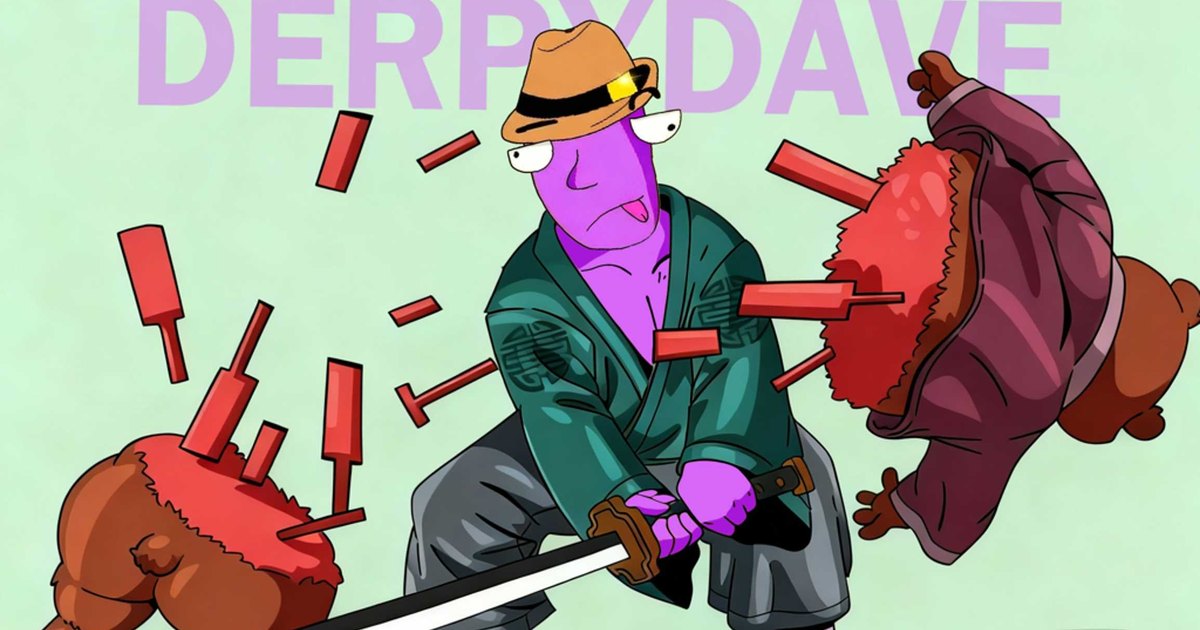
Derpy Dave is a character built around this exact feeling. He began in 2020 as a 12-year-old's drawing, raw and unpolished, and the brand now centers "the overlooked, the sidelined and the counted out." The Derpy AF merch line puts it on a shirt: "Built by the Underestimated." The appeal is not that underdogs always win. It is that they are worth cheering for either way.
Dave's Field Note: I am an underdog. I have also been out-run by an actual dog. I cheered for him too. Respect the hustle.
Follow-up questions
Do people always root for the underdog?
No. Research points to a general tendency, but loyalty, personal stakes and context can override it.
Why do brands tell underdog stories?
Research suggests these stories can make people feel more connected to a brand, especially people who identify as underdogs. They only work if they are true.
Is rooting for the underdog the same as feeling sorry for someone?
Not quite. Research links underdog support to perceived effort and fairness, not just sympathy.
What makes an underdog story feel fake?
Hardship that is exaggerated, effort you never actually see, or a big, well-funded player pretending to be small.
Come hang out
Got a favorite underdog story from sports, art or your own life? Share it with the community on X or Reddit. Or wander through the whole Derpy Dave universe.
Sources
Keep exploring
Written by The Derpy Dave Team
The people behind Derpy Dave, a character-driven movement for the overlooked, the sidelined and the counted out.
@Being_DerpyAF