How do I find my people when I feel different?
By The Derpy Dave Team
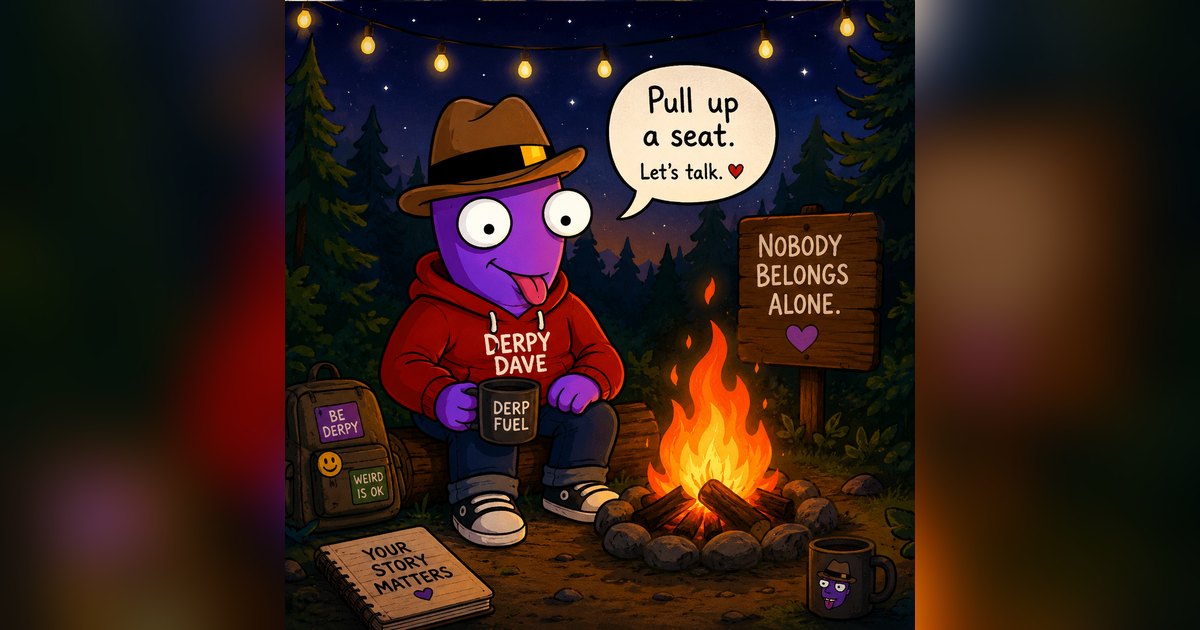
The Short Answer
You find your people by going where your real interests live, showing up more than once, and letting small, low-pressure moments grow over time. "Your people" are rarely found in one movie-style meeting. They are built through shared activities, repeat contact and a little bit of courage, like being the one who says "want to do this again?" It usually takes longer than anyone hopes, and that is normal. It does not mean something is wrong with you.
What "finding your people" means
Finding your people means connecting with others who accept you as you are and share something that matters to you, whether that is a hobby, a sense of humor, values or a life experience. It does not have to be a crowd. Two or three people who really get you can be plenty.
Why it feels harder when you are different
When you feel different, it is easy to assume people will not like you. Research suggests that assumption is often too gloomy. In a 2018 set of studies, people who chatted with strangers consistently underestimated how much their conversation partners liked them and enjoyed their company. The researchers called this the "liking gap," and in one study it lasted for months among college roommates getting to know each other (Boothby, Cooney, Sandstrom and Clark, 2018, *Psychological Science*).
Translation: the person you just talked to may like you more than your brain is reporting.
Where to look
Start with what you already love
Interest-based spaces give you something to talk about besides yourself. Think art classes, game nights, running clubs, fan communities, maker spaces, volunteering, open mic nights, or online groups built around a gloriously specific topic.
Example: You love drawing weird characters but feel lost at parties. A sketch meetup or an online art group hands you a ready-made opener: "How did you get that texture?" Nobody has to talk about the weather.
Choose things that repeat
One-time events are fun. Weekly or monthly ones let you see the same faces again, which gives connection a chance to build.
Try both online and offline
Online groups can be a comfortable first step, especially if crowded rooms feel like a lot. If an online friendship grows, you might try a video call or, when it feels safe, meeting somewhere public.
How strangers turn into friends
1. Keep showing up
Communication researcher Jeffrey Hall studied how friendships form and found that more hours together, especially time spent on shared leisure activities, was linked with closer friendships (Hall, 2018, *Journal of Social and Personal Relationships*). The University of Kansas summary of the work estimated it took about 50 hours to go from acquaintance to casual friend, about 90 hours to become friends, and more than 200 hours to become close friends (University of Kansas, 2018).
Those are rough estimates, not a stopwatch rule. The useful part is the idea behind them: friendship is built over time, not in one perfect conversation.
2. Make tiny invitations
"I'm grabbing food after this, want to come?" is low stakes. If they say no, you are exactly where you started, which was fine.
3. Follow up
Send the meme. Ask how their project went. Small follow-ups say "I noticed you" without making it a big deal.
4. Open up a little at a time
You do not need to share your whole life story on day one. Sharing a bit more as trust builds is how it grows on both sides.
5. Be the welcomer
When you spot someone hovering at the edge of the group, invite them in. People who feel different often find each other this way.
The honest part
Not every group will click. Some spaces will feel off, and some people will not be your people. That is not proof you are unlikable. It is just fit.
And if loneliness has been weighing on your sleep, work or mood for a long time, a community is a nice addition, not a replacement for real support. Talking to a doctor or counselor is a strong move.
Where Derpy Dave comes in
The Derpy Dave project says it wants "everyone who has ever felt like they did not fit in" to have a place. No community can fix everything, but shared jokes, art and conversation can be a decent starting point for meeting other people who feel a bit different. Beyond Words invites people to share original art about how they experience the world, and other people can respond with "I feel this."
Dave's Field Note: I tried to find my people by standing very still in a corner. It did not work. Then I joined a game night and lost spectacularly. Made two friends. Recommend losing.
Follow-up questions
What if I'm introverted?
Smaller groups, activity-based meetups and online spaces can be easier. You do not need to become outgoing. Being consistent often matters more.
How do I know if a group is right for me?
After a few visits, notice how you feel afterward. A bit tired but okay is normal at first. Regularly feeling small, judged or unsafe is a sign to try somewhere else.
Is it weird to make friends as an adult?
Not at all. Adults move, change jobs and drift from old friends all the time. You are probably not the only one in the room hoping to meet someone.
Can online friends be real friends?
They can. Just keep basic safety habits, like protecting personal information until you know someone well.
Come hang out
If you want to meet people who are fine with being a little different, you are welcome to drop into Derpy's Den on Discord or the Telegram group and say hi. You can also play a round of Derpy Block Pop, the free Derpy puzzle game, and see if you can beat the weekly leaderboard.
Sources
Keep exploring

Written by The Derpy Dave Team
The people behind Derpy Dave, a character-driven movement for the overlooked, the sidelined and the counted out.
@Being_DerpyAF