Why IP and Branding Are the Real Moat for Meme Coins in 2025
Written by the Derpy Dave Community
TL;DR , Key Takeaways
The community tokens that survive market cycles aren't the ones with the best launch mechanics, they're the ones with defensible intellectual property and recognizable brands. TROLL secured official IP rights to the Trollface meme. Pudgy Penguins turned NFT IP into a $2.88 billion token. Projects with 10,000+ social media followers significantly outperform their peers. Cultural tokens are evolving into participatory digital brands, and the projects without real IP are building on borrowed time. @being_derpyaf was built IP-first because Derpy Dave isn't just a ticker, it's a character designed to outlive any single market cycle.
The IP Problem Nobody Wants to Talk About
Here's an uncomfortable question for 99% of community token projects: what do you actually own?
Not your liquidity, that can drain. Not your holders, they can sell. Not your chart, that's just a reflection of sentiment. The only thing a project truly owns is its intellectual property: the name, the character, the visual identity, the brand.
And most projects own nothing. They launch with a recycled Pepe derivative, a name that's one typo away from a trademark lawsuit, and zero defensible brand assets. Then they wonder why their "community" evaporates the moment a shinier token launches. The reality is that the branding strategy that wins in 2025 isn't about marketing spend. It's about building IP that has value independent of the token price.
Case Studies: How IP Created Billions in Value
TROLL: Owning the Meme, Literally
TROLL did something almost nobody in crypto has done, they secured official IP rights to the Trollface meme from its original creator, Carlos Ramirez. That's not a partnership announcement. That's not a "collaboration." That's legal ownership of one of the internet's most recognizable images.
Why does this matter? Because when you own the IP, you control the narrative. You can license it, defend it, and build on it without worrying that someone else will launch a competing token using the same imagery. In a market where 11 million tokens launched on a single platform in one year, defensible IP is the scarcest resource in this entire space.
Pudgy Penguins → PENGU: The NFT-to-Token IP Pipeline
Pudgy Penguins is the blueprint for how IP creates value in community-driven projects. They started as an NFT collection, built a recognizable brand with consistent visual identity, expanded into physical merchandise, and then launched PENGU, which hit a $2.88 billion market cap.
That market cap didn't come from tokenomics innovation. It came from years of brand building that created a character people recognized, trusted, and wanted to be associated with. By the time PENGU launched, the IP had already done the heavy lifting. The token was simply the financial layer on top of an existing cultural asset. If that doesn't convince you that brand matters more than tech, I'm not sure what will.
Floki: Marketing as Brand Architecture
Floki took a different approach, aggressive marketing combined with the Elon Musk association to build brand recognition at scale. Love it or hate it, Floki proved that consistent, high-visibility branding creates a floor under valuation that pure speculation simply can't replicate.
The key insight from Floki isn't "get a celebrity endorsement." It's that brand recognition compounds over time. Every billboard, every sponsorship, every viral moment adds to a cumulative brand asset that new holders can immediately understand. That compounding effect is something most projects completely underestimate.
TRUMP: Political Branding at Scale
The TRUMP coin leveraged the most recognizable political brand on Earth to achieve a multi-billion dollar market cap. It's the most extreme example of a simple truth: pre-existing brand recognition is the most powerful launch mechanic for any community token. You don't need to be a former president to apply this lesson. You need a brand that people can identify, remember, and feel something about in under five seconds.
Pippin: Storytelling as IP Strategy
Pippin used Lord of the Rings lore to build a storytelling-driven community, proving that IP doesn't have to be completely original to be effective. It has to be resonant. By tapping into existing cultural mythology, Pippin gave its community a shared narrative framework that made the project feel like more than just another token on a DEX.
Why Branding Strategy Matters More Than Ever
The Data Is Clear
Projects with 10,000+ social media followers significantly outperform their peers across every metric, trading volume, holder retention, and market cap sustainability. In a market where $1.2 trillion in annual volume flows through cultural tokens, brand strength is the closest thing to a fundamental. That's not because followers cause price appreciation. It's because social following is a proxy for brand strength, and brand strength is the closest thing to a fundamental that cultural tokens have. If you're evaluating any Solana project right now, the strength of the brand should be the first thing you look at.
The Rise of Participatory Digital Brands
The industry is converging on a term for what's happening: community tokens are evolving into "participatory digital brands." This isn't marketing jargon, it's a structural description of how value actually accrues in this space.
What does a participatory digital brand look like? It starts with a recognizable visual identity where you see the character and know the project instantly. It includes community co-creation where holders contribute to the brand's evolution, not just its market cap. There's a cross-platform presence that extends beyond a DEX chart into X, memes, merchandise, and culture. And there's narrative depth, a story to tell, not just a ticker to shill.
The projects that check all four boxes are the ones still standing after the hype cycle ends. The ones that check zero boxes? They're among the 11.6 million dead tokens from 2025.
IP Is the Only Sustainable Moat
In a market where anyone can launch a token in 30 seconds, what can't be copied? Not the smart contract, that's open source. Not the liquidity, that's mercenary. Not the community, that follows attention. The only thing that can't be trivially replicated is intellectual property: a character, a brand, a visual identity, a cultural position that belongs to one project and one project only. IP is the moat. Everything else is a temporary advantage that evaporates the moment something shinier comes along.
How @being_derpyaf Thinks About IP and Brand
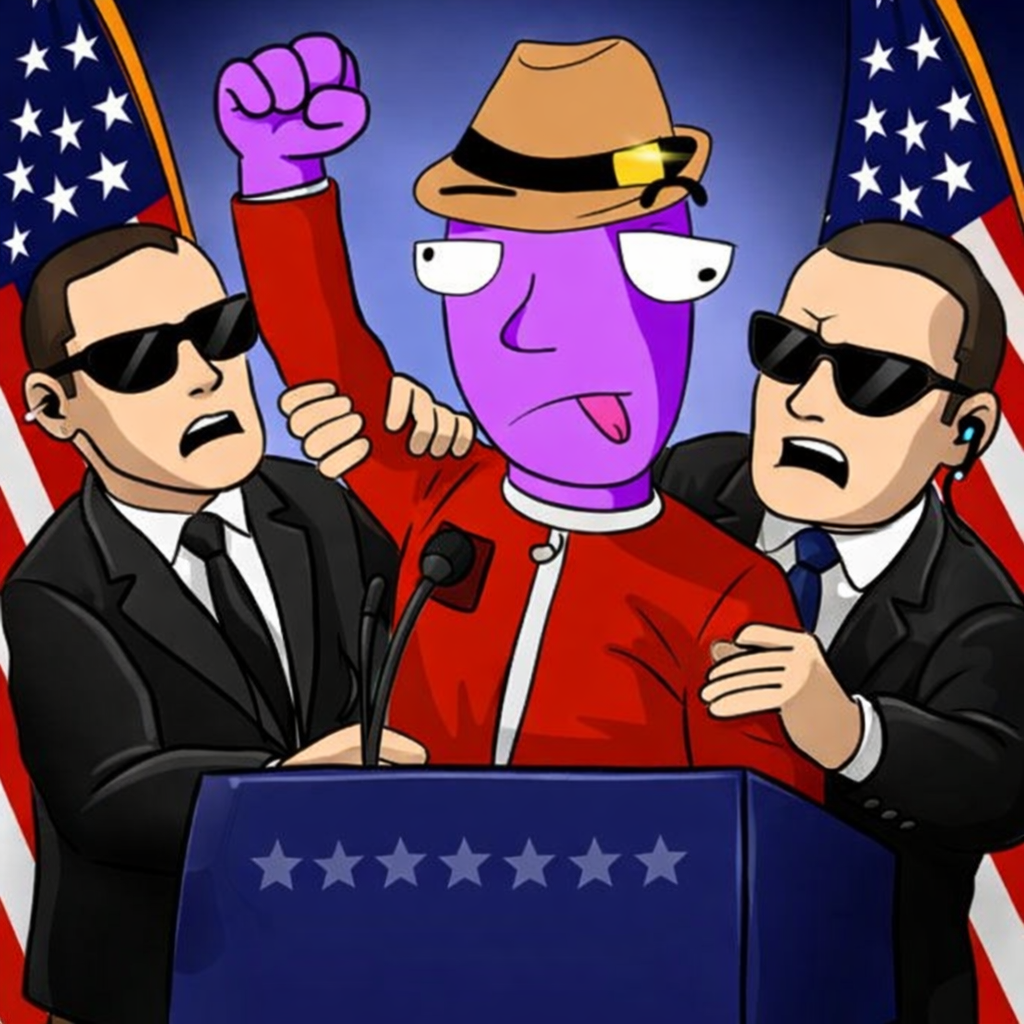
@being_derpyaf wasn't built around a ticker symbol. It was built around Derpy Dave, a character with a personality, a visual identity, and a cultural position that exists independent of any price chart. And that was a deliberate choice.
We watched projects launch with nothing but a name and a bonding curve, pump for 48 hours, and join the graveyard of 11 million dead tokens. So we decided to build differently. Derpy Dave is a cultural artifact, not a logo slapped on a token, not a derivative of someone else's meme. It's a character that the community recognizes, relates to, and wants to build around. The kind of IP that can expand into content, merchandise, partnerships, and cultural moments that haven't been invented yet.
Is that a bigger bet than launching another dog coin? Yes. But it's the right bet for a grassroots project that wants to exist in 2026, 2027, and beyond, because smart investors don't bet on the present, they bet on what's becoming. The data from every successful community-driven project in history says the same thing: brand is the moat, IP is the foundation, and everything else is noise.
Join the Derpy Dave Community
We're building something different here, a tribe of underdogs who show up whether the chart is green, red, or completely sideways. No paid shills. No empty promises. Just real people who understand that culture outlasts hype, and community beats everything.
Here's where you'll find us:
🌐 Website & Hub: derpydave.xyz , Start here for the full story, roadmap, and project updates
🐦 Daily Vibes on X: @Being_DerpyAF , Memes, market takes, and real-time community energy
💬 Telegram (The Derpy Den): t.me/derpyden , Weekly sessions, daily discussions, and direct community access
💬 Discord Strategy Hub: discord.gg/WvdcD6aVps , Deep dives, holder AMAs, and community governance
📢 Reddit Community: r/derpydaveofficial , Longer discussions, research threads, and community stories
The derpy shall inherit the earth. We're just getting started. 🟣
Written by the Derpy Dave Community
The voice behind $DERPYDAVE , a community-driven meme coin on Solana building a real IP from the ground up. 100% community-owned, no dev wallets.
@Being_DerpyAF