How to Build a Crypto Community That Actually Lasts: The @being_derpyaf Playbook
Written by the Derpy Dave Community
TL;DR , Key Takeaways
Community isn't a feature of cultural tokens, it is the product. Projects with strong community involvement see 50%+ increased participation across all metrics. Community-driven projects are evolving into "participatory digital brands" where engagement directly drives valuation. But most crypto communities are built on hype, not substance, and it shows when the chart turns red. @being_derpyaf is building a tribe, not a Telegram pump group. Here's why that distinction matters and how real crypto community building actually works.
Why Community Matters More Than Tokenomics
There's a dirty secret in crypto that nobody in DeFi wants to admit: community engagement is the primary factor in how cultural tokens accrue value. Not the smart contract. Not the liquidity pool depth. Not the "innovative" bonding curve. Community.
When someone asks "why do these projects pump?", the honest answer is that enough people decided to care at the same time. And when the market turns? The projects with real communities are the only ones that survive. The question isn't whether community matters. The real question is whether you're building a community that can sustain that caring beyond the first green candle.
And the data backs this up. Projects with strong community involvement consistently see 50% or more increased participation in governance, content creation, and organic promotion. That's not vibes, that's measurable signal that separates projects with staying power from projects with a 72-hour shelf life.
The Anatomy of a Real Community
What "Community" Actually Means On-Chain
Let's be specific here, because "community" is probably the most overused word in crypto. Every rug pull claims to have a "strong community" right up until the deployer drains the LP.
A real community has three layers, and understanding them changes how you evaluate any project. At the center you have the Core, the people who show up every day regardless of price action. They make memes, they engage on X, they onboard newcomers. They're not here for a 10x; they genuinely enjoy being part of something. Around them sits the Active Ring, holders who engage weekly, participate in community events, and amplify the brand. They might not be making content, but they're retweeting, commenting, and holding through dips. And then there's the Outer Ring, people who've heard of the project, maybe hold a small bag, and are watching from a distance. Here's what's interesting: they convert inward when the community proves it's real. Not when the chart goes up, but when the community stays active while the chart goes sideways.
Communities That Got It Right
The community-driven projects that defined 2025 all share one trait, they built communities before they built market caps. JELLYJELLY leaned into interactive challenges that turned holders into active participants, not passive investors sitting around watching a chart. Layer Brett grew to 850,000+ holders by creating a brand identity so recognizable that the community essentially marketed itself without anyone asking. And Wall Street Pepe borrowed the WSB branding playbook, irreverent, self-aware, and built around a shared identity that people wanted to claim as their own.
These projects succeeded in a market environment where 11.6 million tokens failed, proof that community engagement isn't just a nice-to-have. It's the survival mechanism.
None of these projects succeeded because of their tokenomics page. They succeeded because people felt like they belonged to something bigger than a trade.
How to Build a Crypto Community: The Principles That Actually Work
Principle 1: Transparency Is Non-Negotiable
The fastest way to kill a community is opacity. Anonymous teams, unclear token allocations, vague roadmaps, these aren't just red flags, they're community poison.
Look, the crypto space has earned its reputation for scams. Coordinated shilling, MEV bot frontrunning, fake partnerships, honeypot tokens, and anonymous teams have burned millions of people. Every serious community builder in 2025 has to actively work against that legacy. Transparency doesn't mean doxxing your team (though it helps). It means clear communication about what the project is and isn't, honest acknowledgment of risks, visible and verifiable on-chain activity, and consistent presence, not just when the chart is green. When you look at projects like Derpy Dave, the transparency-first approach is baked into the DNA from day one.
Principle 2: Give People a Role, Not Just a Token
The shift from community tokens to "participatory digital brands" is the most important evolution in this space. A token in a wallet is passive. A role in a community is active. And that difference is everything.
The best communities in 2025 give holders ways to actually contribute. That means content creation and meme competitions, community moderation and onboarding of new members, involvement in brand development and creative direction, and governance over community decisions that matter. When people have agency, they have loyalty. When they just have a bag, they have an exit plan. The Derpy Dave community was designed around this principle, giving people something to do, not just something to hold.
Principle 3: Build Infrastructure for Belonging
Web3 social platforms are becoming vital infrastructure for these communities. The convergence of cultural tokens with NFTs and AI-powered community management tools is creating new ways to organize, reward, and scale communities without losing the culture that made them special in the first place.
But here's the thing, infrastructure isn't just platforms. It's rituals. Daily threads. Weekly spaces. Monthly events. The communities that last have rhythms that members can rely on. Predictability in community, unpredictability in memes. That's the formula, and the projects that understand it are the ones still standing a year from now.
Red Flags: How to Spot a Fake Community
Not every active Discord is a real community, and learning to tell the difference can save you a lot of pain. Coordinated shilling patterns are a dead giveaway, if every account is posting the same message at the same time, you're looking at a bot farm, not a community. MEV bot frontrunning on community-promoted buys means someone is extracting value from the very people they claim to serve. Fake partnership announcements are rampant; if the "partner" hasn't acknowledged the partnership, it doesn't exist. Honeypot token mechanics where you can buy but can't sell mean you're not in a community, you're in a trap. And anonymous teams with no track record should always raise questions; anonymity isn't inherently bad, but anonymity plus no verifiable history is a serious red flag.
The difference between a community and a crowd is trust. And trust is built through consistent, verifiable behavior over time. There are no shortcuts.
How @being_derpyaf Builds Community Differently
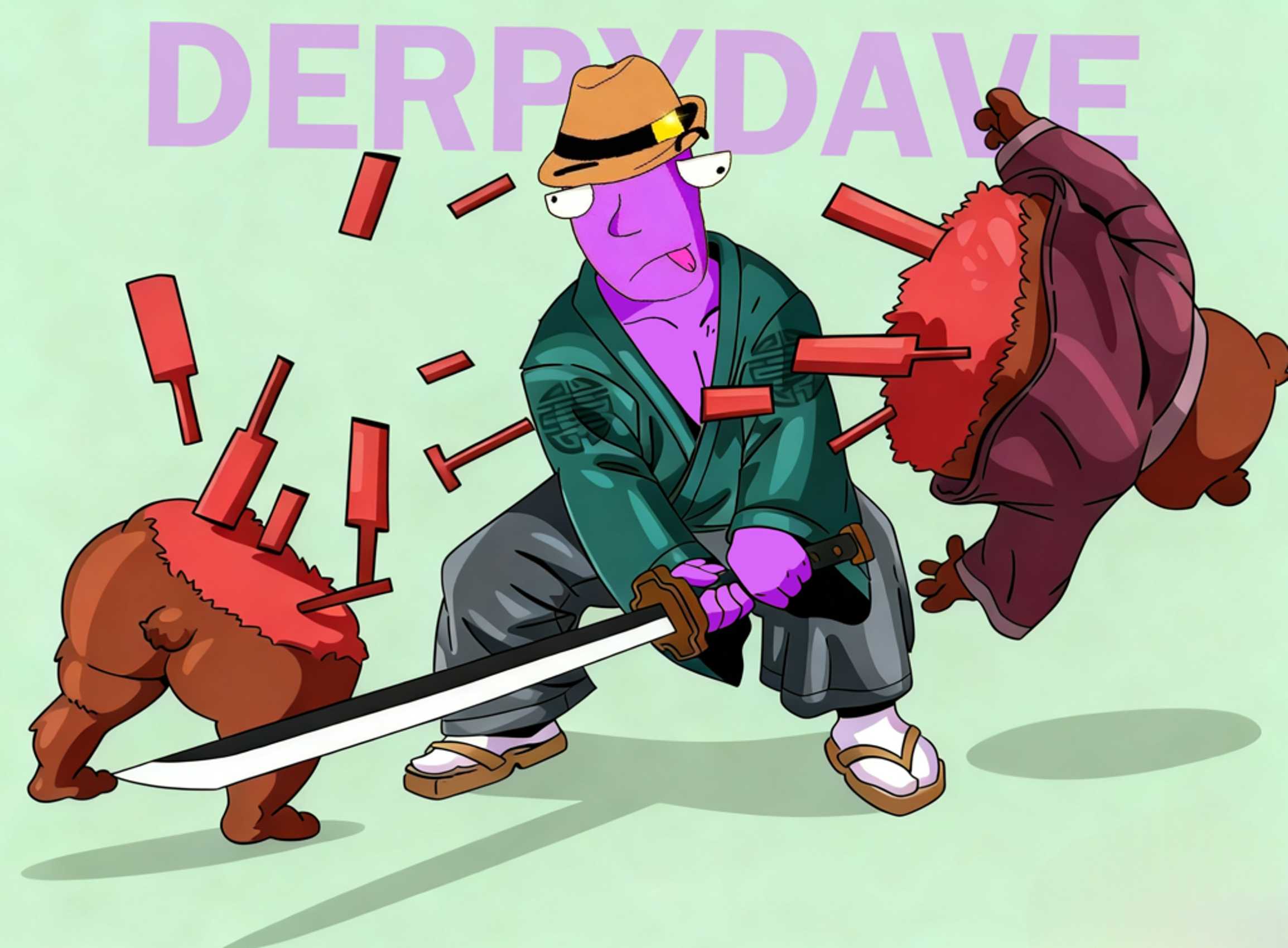
@being_derpyaf didn't start with a token launch strategy. It started with a character, Derpy Dave, and a simple question: what if a community-driven project was actually fun to be in, even on red days?
That's not a revolutionary thesis. It's an obvious one that almost nobody executes on. Most projects optimize for launch day engagement and then wonder why their community evaporates by week three. The Derpy Dave project is building the opposite: a community where the culture is the product, the brand is recognizable, and the people who show up aren't just holding a token, they're part of a tribe that exists beyond any single price candle.
Is that harder than launching on Pump.fun and hoping for the best? Absolutely. Is it more likely to be here in 12 months? We'd bet on it. Actually, we are betting on it.
Join the Derpy Dave Community
We're building something different here, a tribe of underdogs who show up whether the chart is green, red, or completely sideways. No paid shills. No empty promises. Just real people who understand that culture outlasts hype, and community beats everything.
Here's where you'll find us:
🌐 Website & Hub: derpydave.xyz , Start here for the full story, roadmap, and project updates
🐦 Daily Vibes on X: @Being_DerpyAF , Memes, market takes, and real-time community energy
💬 Telegram (The Derpy Den): t.me/derpyden , Weekly sessions, daily discussions, and direct community access
💬 Discord Strategy Hub: discord.gg/WvdcD6aVps , Deep dives, holder AMAs, and community governance
📢 Reddit Community: r/derpydaveofficial , Longer discussions, research threads, and community stories
The derpy shall inherit the earth. We're just getting started. 🟣
Written by the Derpy Dave Community
The voice behind $DERPYDAVE , a community-driven meme coin on Solana building a real IP from the ground up. 100% community-owned, no dev wallets.
@Being_DerpyAF