The Death of Utility: Why Community Tokens Are Eating "Serious" Crypto Projects Alive
Written by the Derpy Dave Community
Published April 2026 | by the Derpy Dave Community
TL;DR , The Investment Thesis in 60 Seconds
The "utility token" narrative is dying, and the numbers prove it. While venture-backed protocols spent years shipping features nobody asked for, cultural tokens captured the only resource that actually matters in crypto: attention. Dogecoin outperformed virtually every utility token over the last five years. Dogwifhat hit a $4.8 billion market cap with nothing but a dog in a hat. Pudgy Penguins built a brand empire worth billions without a single DeFi integration. The community token market surged past $120 billion in late 2024 while "serious" projects quietly bled out. This isn't a fluke. It's a market correction, the market correcting what it actually values. Projects like Derpy Dave on Solana aren't ignoring this shift. They're built on it.
The Utility Paradox: More Features, Less Adoption
Here's a question nobody in crypto wants to answer honestly: If utility drives value, why do the most feature-rich protocols have the worst token performance?
The last five years produced an avalanche of Layer 1s, Layer 2s, cross-chain bridges, and restaking protocols. Each shipped a 40-page whitepaper and a roadmap that read like a PhD thesis. The result? A graveyard of tokens trading 90–95% below their all-time highs, with Discord servers emptier than a bear market Bitcoin meetup.
That's the utility paradox in a nutshell: more features create more complexity, and more complexity kills adoption. Projects that promised to "revolutionize DeFi" built cathedrals nobody visits. Meanwhile, a picture of a dog in a pink knitted hat became worth $4.8 billion. Let that sink in.
Community Tokens vs Utility Tokens: What the Data Actually Says
Let's stop theorizing and look at cold numbers. The data isn't just favorable to cultural tokens, it's embarrassing for utility maximalists.
DOGE: The Original "Joke" That Outperformed Everything
Dogecoin hit ~$40.6 billion in market cap during its 2025 peak, larger than virtually every "utility" protocol ever managed. Over five years, DOGE outperformed roughly 99% of tokens with a utility thesis, including projects that raised hundreds of millions in venture capital.
And this pattern repeated across the entire Solana meme coin ecosystem in 2025, where cultural tokens absorbed over 60% of capital flow while utility projects quietly bled out.
What really drives the point home is the 21Shares Dogecoin ETF (TDOG), which launched on Nasdaq in January 2026, the first U.S. spot meme coin ETF with SEC approval. A literal joke coin now has institutional-grade financial products built around it. Your favorite L2 rollup does not. That should tell you everything about where the market sees real value.
WIF: $4.8 Billion on Pure Vibes
Dogwifhat (WIF) reached an all-time high market cap of ~$4.8 billion in March 2024. Its utility? Zero. Its tech stack? A Solana SPL token. Its value proposition? A Shiba Inu wearing a hat. No presale, no VC allocation, no complex tokenomics. Just a community that decided a picture was worth billions. WIF proved something the industry refused to accept: in a market driven by narrative and attention, simplicity is a feature, not a bug.
Pudgy Penguins: Brand > Protocol
Pudgy Penguins peaked at a ~$2.2 billion market cap in 2025 and expanded into physical merchandise, mobile gaming, and a browser game. Canary Capital filed for an ETF holding PENGU tokens and NFTs. The team burned over $150 million worth of tokens.
Try naming a DeFi protocol with that level of cultural penetration. You can't, because protocols don't go viral. Brands do.
Why "Serious" Crypto Projects Keep Losing
The crypto industry has a cargo-cult relationship with utility. Founders believe that if they build enough features, ship enough code, and publish enough documentation, value will magically follow. It doesn't. Here's what actually drives token value in 2025 and beyond.
Attention Is the Scarcest Resource in Crypto
Over 15,000 tokens compete for the same capital pool. In an attention economy this noisy, the projects that capture mindshare win. Full stop. You can build the most elegant zero-knowledge proof system ever conceived, but if nobody's talking about you on X, your token is going to zero. Cultural tokens don't compete on features, they compete on cultural real estate. And cultural real estate compounds in a way that tech stacks simply don't.
Community Beats Code Every Time
Over 13 million community tokens launched in 2025 alone. Fewer than 1% survived past 60 days. The ones that survived didn't have better tech, they had stronger communities. The survival filter in crypto isn't technical excellence. It's social resilience.
That's why understanding how real crypto communities are built matters more than reading another whitepaper about technical architecture.
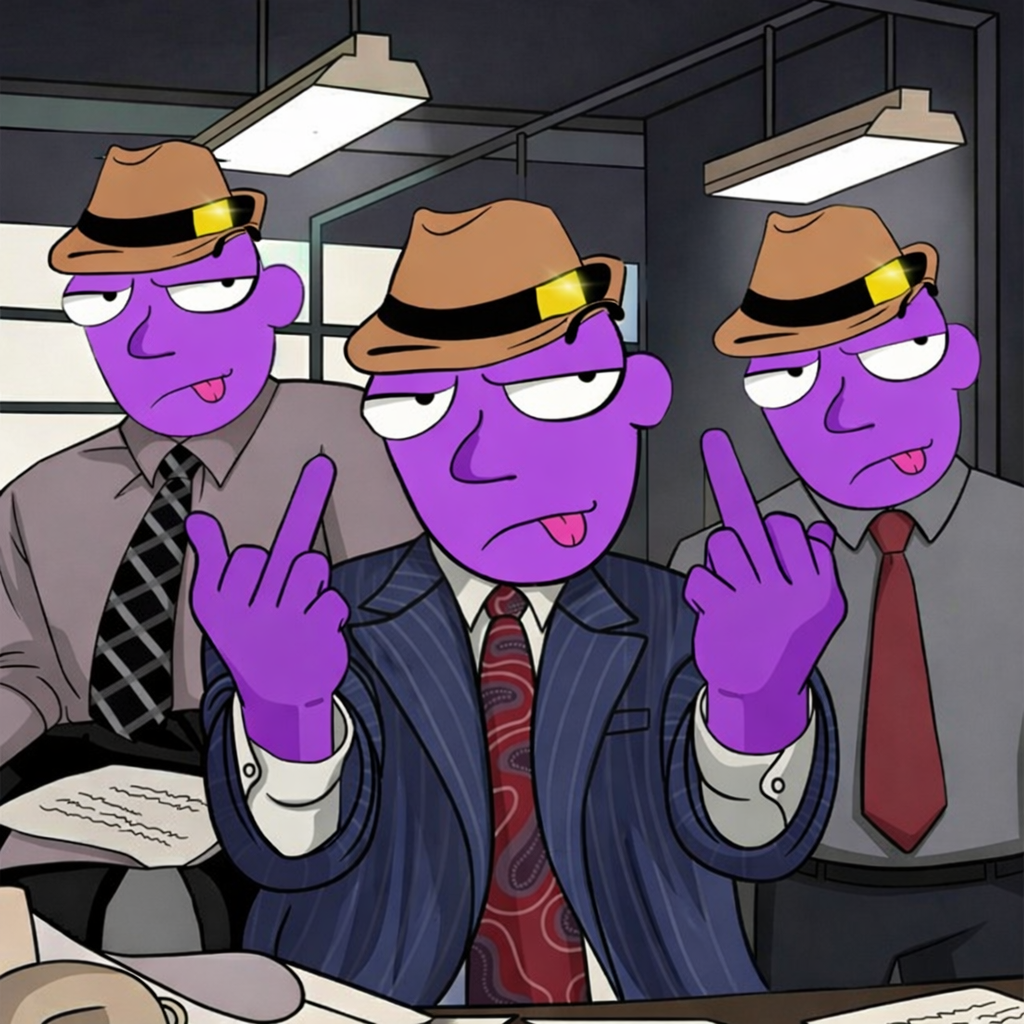
This is exactly why projects like @being_derpyaf resonate. Derpy Dave didn't launch with a whitepaper full of promises about "revolutionizing" anything. It launched with a story, a drawing by a 12-year-old who felt overlooked, turned into a community symbol for the underestimated and resilient. No dev wallets. No team allocation. 100% community-owned. That's not a gimmick. That's a fundamentally different value proposition than "trust our team to deliver the roadmap." When the narrative is the community itself, you don't need to ship features to stay relevant. You just need to show up.
The Brand Moat Is the Only Moat
In traditional tech, network effects create moats. In crypto, forks are free, any protocol's code can be copied overnight. You know what can't be copied? A meme that lives rent-free in people's heads. A brand that transcends the token.
Pudgy Penguins proved this by expanding into physical toys and mobile gaming. Derpy Dave is building toward legitimate Web3 IP, NFT collections, brand partnerships, and community-driven lore with more cultural staying power than any governance token could ever hope to achieve.
The Crypto Narrative Shift: From "What Does It Do?" to "Who Am I With?"
The investment thesis for community-driven projects in 2025 and beyond isn't about speculation, it's about a fundamental shift in how crypto creates value. The question investors should be asking isn't "What does this token do?" It's "What does holding this token say about me?"
Think about it this way. People don't buy Supreme hoodies for the fabric quality, they buy the identity signal. Cultural tokens are crypto's identity layer, and that layer is worth more than any execution environment.
The SEC acknowledged this when it classified meme coins as collectibles, not securities, in February 2025. Even regulators understand these tokens derive value from culture, not cash flows.
So Is Utility Dead?
Not entirely. Infrastructure matters, someone has to build the rails that community tokens trade on (thank you, Solana). But the idea that every token needs a utility thesis to justify its existence is dead. The market has spoken, repeatedly and loudly: culture eats utility for breakfast.
The projects that will define the next era of crypto aren't the ones with the most impressive tech demos. They're the ones with the most passionate communities, the most recognizable brands, and the most honest value propositions. No pretense. No vaporware roadmaps. Just genuine cultural connection.
That's what @being_derpyaf represents, not a promise of what crypto could be someday, but an embrace of what crypto already is: a coordination game where belief, community, and culture are the product.
Join the Derpy Dave Community
We're building something different here, a tribe of underdogs who show up whether the chart is green, red, or completely sideways. No paid shills. No empty promises. Just real people who understand that culture outlasts hype, and community beats everything.
Here's where you'll find us:
🌐 Website & Hub: derpydave.xyz , Start here for the full story, roadmap, and project updates
🐦 Daily Vibes on X: @Being_DerpyAF , Memes, market takes, and real-time community energy
💬 Telegram (The Derpy Den): t.me/derpyden , Weekly sessions, daily discussions, and direct community access
💬 Discord Strategy Hub: discord.gg/WvdcD6aVps , Deep dives, holder AMAs, and community governance
📢 Reddit Community: r/derpydaveofficial , Longer discussions, research threads, and community stories
The derpy shall inherit the earth. We're just getting started. 🟣
Disclaimer: This post is opinion and commentary, not financial advice. $DERPYDAVE is a community token with no intrinsic value. Cryptocurrency investments carry high risk. Do your own research and never invest more than you can afford to lose.
*
Written by the Derpy Dave Community
The voice behind $DERPYDAVE , a community-driven meme coin on Solana building a real IP from the ground up. 100% community-owned, no dev wallets.
@Being_DerpyAF